
Insulation Types
The Ultimate Guide to Upgrading Your Home’s Insulation in Northern Virginia
If you live in Northern Virginia, you know our climate demands a lot from our homes. Between the sweltering, humid summers and the freezing, bitter winters, your HVAC system works overtime to keep your family comfortable. If your home isn’t properly insulated, you aren’t just losing perfectly conditioned air—you’re losing money every month.
At Northern Virginia Insulation and Exteriors, we specialize in helping local homeowners seal their thermal envelopes, lower their energy bills, and improve their indoor air quality. But with so many options on the market, how do you know what your home actually needs?
Let’s break down the primary types of insulation and crawl space solutions we offer, so you can make an informed decision for your property.
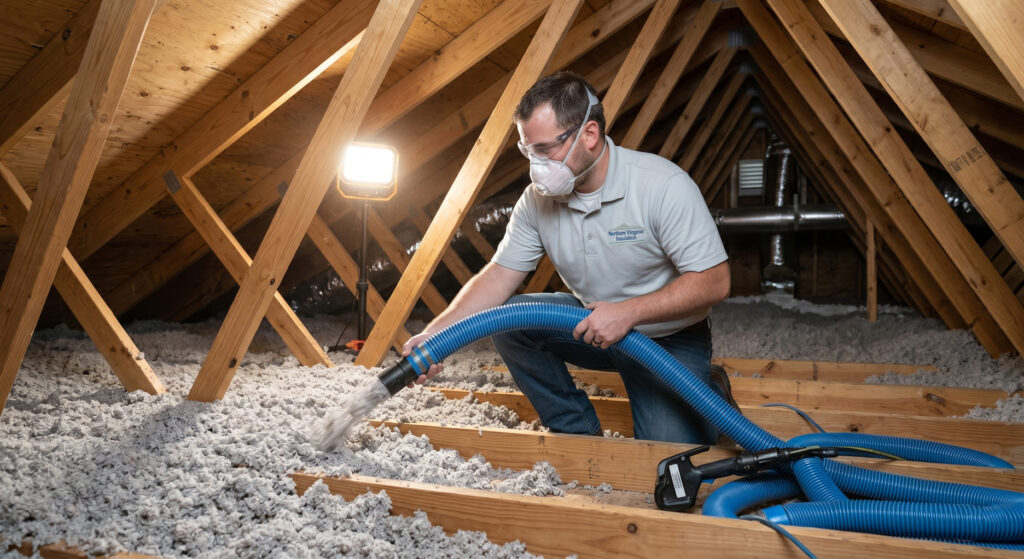
1. Blown-In Insulation: Fast, Effective, and Seamless
Blown-in (or loose-fill) insulation is one of the most popular choices for attic retrofits. Because it is installed using a specialized blowing machine, the material settles into every nook, cranny, and awkwardly shaped corner of your attic, creating a seamless thermal blanket.
We offer two primary materials for blown-in insulation:
Cellulose Insulation
Cellulose is an eco-friendly powerhouse. It is made from 85% recycled newspaper, making it a fantastic choice for environmentally conscious homeowners.
Pest Resistance: The paper is heavily treated with boric acid before installation. This naturally deters pests like mice and insects, and it also gives the material a Class-1 fire safety rating.
Density: Cellulose is dense, which gives it excellent soundproofing qualities and helps it effectively block airflow.
Fiberglass Insulation
Blown-in fiberglass is made from spun glass fibers.
Moisture Resistance: Unlike organic materials, fiberglass doesn’t absorb moisture, which means it won’t hold onto dampness or settle as heavily over time.
Lightweight: It is lighter than cellulose, making it highly effective for attic spaces where weight limits on the drywall ceiling are a concern.
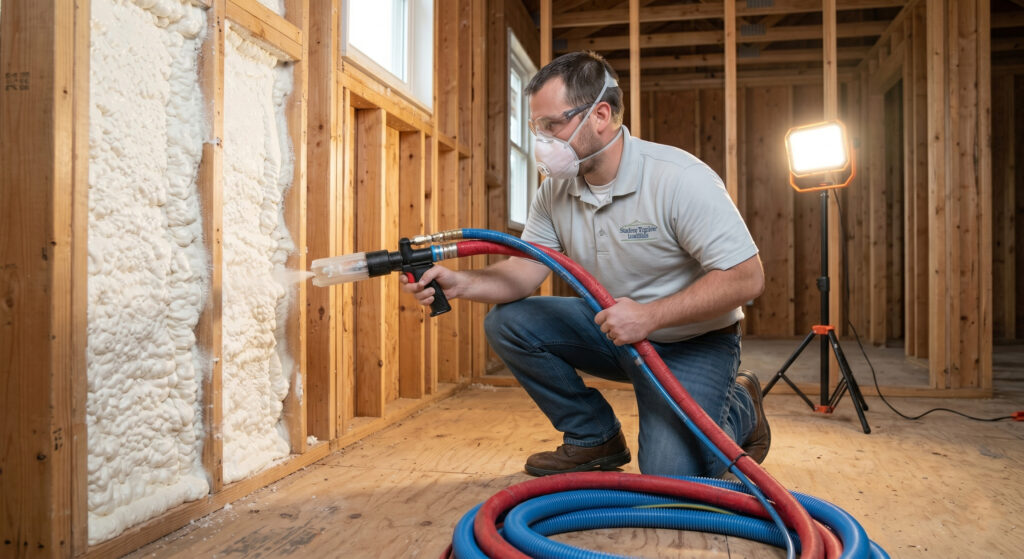
2. Spray Foam Insulation: The Ultimate Air Seal
If you want the absolute highest tier of energy efficiency, spray foam is the answer. While traditional insulation slows down heat transfer, spray foam does double duty: it insulates and completely seals air leaks in one step. The liquid foam is sprayed into cavities, where it rapidly expands to fill the space.
We install both types of spray foam, each serving a distinct purpose:
Open Cell Spray Foam
Open cell foam is lighter, softer, and more flexible.
Expansion: It expands up to 100 times its original size, making it incredible at filling massive cavities and hard-to-reach areas.
Sound Dampening: Because of its spongy texture, open cell foam is an exceptional sound barrier. It’s frequently used in interior walls and floors to reduce noise between rooms.
Closed Cell Spray Foam
Closed cell foam is dense, rigid, and incredibly durable.
Moisture Barrier: The cells are tightly packed together, meaning water and vapor cannot pass through it. This makes it an ideal choice for moisture-prone areas like basements and exterior walls.
Higher R-Value: Closed cell foam has one of the highest R-values (thermal resistance) per inch of any insulation on the market. It also adds structural rigidity to the walls where it is applied.
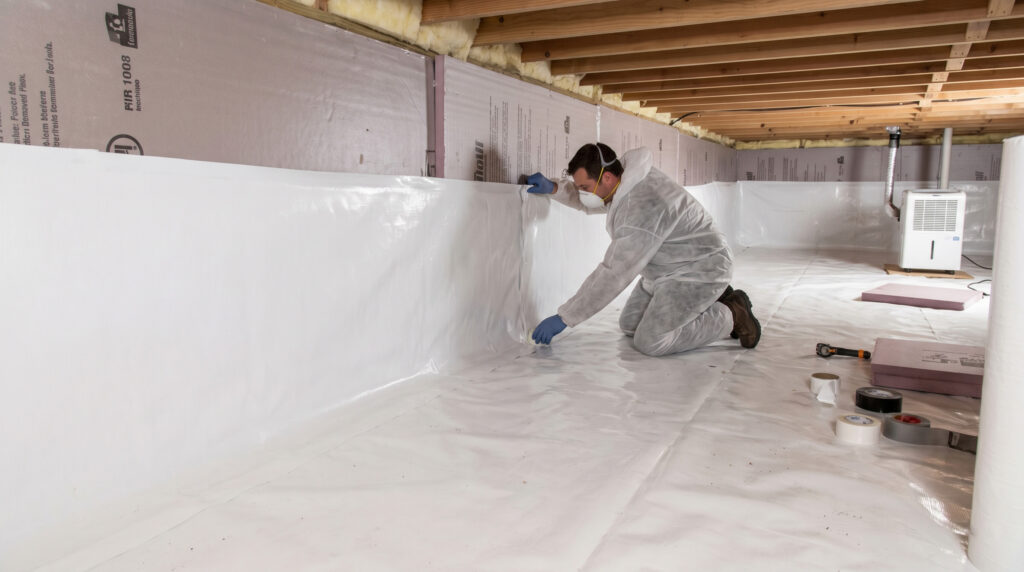
3. Crawl Space Solutions: Insulation vs. Encapsulation
In Northern Virginia, the humidity is relentless, and a traditional vented crawl space is a magnet for moisture, mold, and wood rot. What happens beneath your house directly impacts the air you breathe inside it. We offer two distinct approaches to securing your crawl space:
Crawl Space Insulation
Standard crawl space insulation involves securing fiberglass batts or rigid foam board directly into the floor joists beneath your living space.
The Goal: This method keeps the cold winter air that enters the crawl space from freezing your floors and leaching the heat out of your home.
Best For: Homes with relatively dry crawl spaces that primarily need thermal protection rather than heavy moisture control.
Crawl Space Encapsulation
If you want to solve humidity and pest issues permanently, encapsulation is the gold standard.
The Process: We completely seal the crawl space from the outside environment. This involves blocking off the exterior vents, laying a heavy-duty, thick vapor barrier across the dirt floor, and sealing it directly up the foundation walls.
The Result: The crawl space becomes a clean, dry, conditioned extension of your home. Encapsulation stops ground moisture from evaporating into your floorboards, eliminates the damp environment that termites and mold thrive in, and dramatically improves your home’s overall indoor air quality.
Frequently Asked Questions (FAQ)
What is R-Value and how much do I need in Northern Virginia?
R-Value measures a material’s resistance to heat flow. The higher the number, the better the insulation. In our region (Zone 4), current building codes suggest a minimum of R-49, though we often recommend R-60 for maximum comfort and energy savings. Most older homes in Fairfax and Loudoun counties currently sit at R-19 or lower.
Do you need to remove my old insulation first?
Not necessarily. If your existing insulation is dry and free of rodent infestation/droppings, we can usually add the new layer directly on top. This saves you money and reduces landfill waste. However, if we find evidence of pests, water damage, or mold, we will recommend a full removal and sanitation service.
How long does the process take?
Most residential projects in Northern Virginia are completed in one day. A standard 1,000–1,500 sq. ft. attic usually takes our crew about 4 to 6 hours from arrival to final cleanup.
Ready to Upgrade Your Home?
Choosing the right insulation depends on your home’s architecture, your budget, and your specific energy goals. Whether you need a fresh blanket of borate-treated cellulose in the attic or a complete crawl space encapsulation to fight off the Virginia humidity, Northern Virginia Insulation and Exteriors has the expertise to get the job done right.