Insulation Process
Our Proven Attic Insulation Process
Expert Comfort Solutions for Northern Virginia Homes
Living in Northern Virginia means dealing with humid summers and freezing winters. If your home feels drafty, has uneven temperatures between rooms, or your energy bills are skyrocketing, the issue is likely in your attic.
With over 20 years of hands-on experience, we don’t just “blow in insulation.” We treat your home as a complete system. We follow a strict building science protocol to ensure your home is efficient, safe, and comfortable.
Here is exactly what happens when you choose us to upgrade your attic.
Step 1: The Owner-Led Evaluation (Free of Charge)
We do not send high-pressure sales representatives who have never held a staple gun. When you schedule an estimate, the owner of the company comes to your home.
We believe that accurate pricing and effective solutions require an expert eye. During this 45–60 minute visit, we will:
Inspect Current Levels: We measure your existing insulation depth to determine your current R-Value (thermal resistance).
Check Ventilation: We inspect your soffit vents, ridge vents, and gable vents to ensure your roof can “breathe,” preventing mold and ice dams.
Identify Air Leaks: We look for bypasses around light fixtures, plumbing stacks, and chimneys where conditioned air is escaping into the attic.
Provide a Quote: You receive a transparent, written proposal with no hidden fees.
Step 2: Preparation and Air Sealing
This is the most critical step that budget contractors skip.
Insulation works like a wool sweater—it keeps you warm. But if the wind is blowing through the sweater, you still get cold. Air sealing is the windbreaker. Before we add new insulation, we must stop the air leaks.
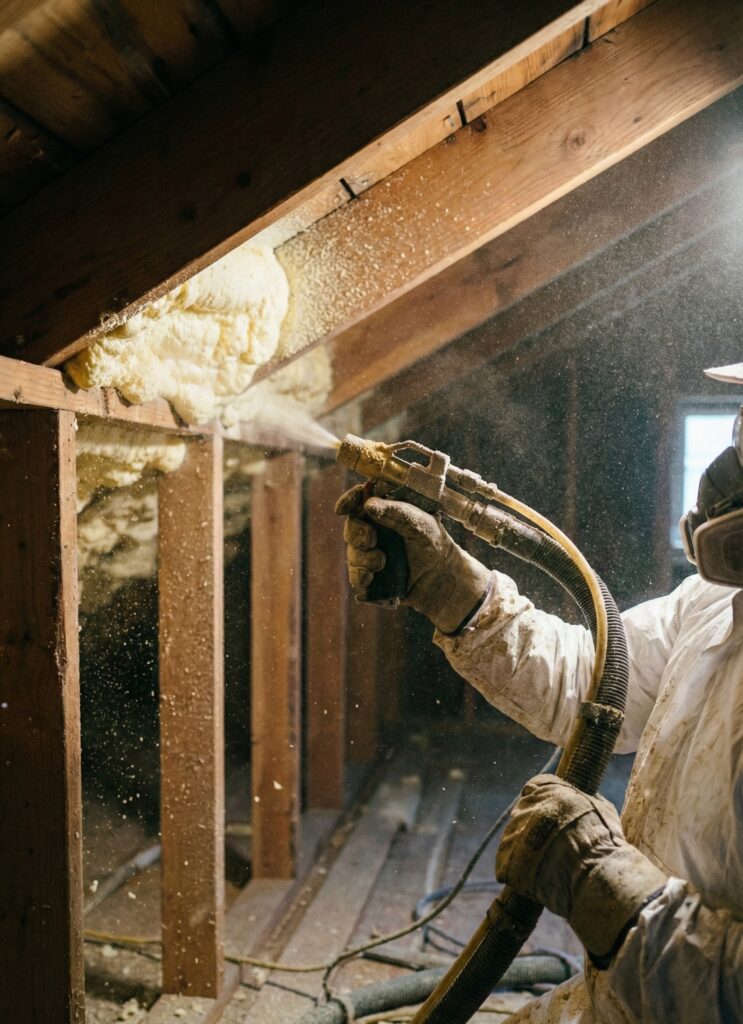
Sealing Penetrations: We use expanding spray foam to seal gaps around electrical wires, pipes, and ceiling fixtures.
Chimney & Flue Safety: We install metal flashing and high-temperature fire-rated caulk around heat sources to ensure safety.
Recessed Lighting: We install covers over can lights to prevent drafts and reduce fire risk.
Step 3: Ventilation Management
Proper airflow is vital to the longevity of your roof. In Northern Virginia, trapped heat in the attic can cook your shingles in the summer and cause moisture buildup in the winter.
Baffle Installation: We install “rafter mates” or baffles in the soffit areas. This ensures that the new insulation does not block fresh air from entering the attic, keeping your roof deck healthy.
Step 4: Installation (The Blow-In)
Once the attic is prepped, air-sealed, and vented, we install the insulation.
Material: We typically recommend blown-in cellulose or premium loose-fill fiberglass or spray foam. These materials fill nooks and crannies far better than fiberglass batts (rolls).
The Target: For Northern Virginia (IECC Climate Zone 4A), we aim for R-49 to R-60. This usually requires 14 to 18 inches of material depth.
The Hatch: We adhere rigid foam board to your attic hatch or pull-down stairs and install weather stripping, creating a thermal seal at the weakest point of your ceiling.
Step 5: Clean Up and Final Inspection
We treat your home with respect. Our process includes:
Laying down drop cloths from the entry door to the attic access.
Using dust-mitigation techniques during the blowing process.
Vacuuming the workspace thoroughly upon completion.
A final walk-through with you to show the depth rulers and verify the work.
Frequently Asked Questions (FAQ)
What is R-Value and how much do I need in Northern Virginia?
R-Value measures a material’s resistance to heat flow. The higher the number, the better the insulation. In our region (Zone 4), current building codes suggest a minimum of R-49, though we often recommend R-60 for maximum comfort and energy savings. Most older homes in Fairfax and Loudoun counties currently sit at R-19 or lower.
Do you need to remove my old insulation first?
Not necessarily. If your existing insulation is dry and free of rodent infestation/droppings, we can usually add the new layer directly on top. This saves you money and reduces landfill waste. However, if we find evidence of pests, water damage, or mold, we will recommend a full removal and sanitation service.
How long does the process take?
Most residential projects in Northern Virginia are completed in one day. A standard 1,000–1,500 sq. ft. attic usually takes our crew about 4 to 6 hours from arrival to final cleanup.
Will this help with Ice Dams?
Yes. Ice dams form when heat escapes your living space, melts the snow on your roof, and the water refreezes at the gutters. By air sealing the attic floor and increasing insulation, we stop the heat transfer that causes this cycle.
Is blown-in insulation better than rolled batts?
For existing homes (retrofits), yes. Your attic has framing, wires, and pipes that make the floor uneven. Rolled batts leave gaps and seams where heat escapes. Blown-in insulation flows around these obstacles like a liquid, creating a seamless thermal blanket.
Ready to stop overpaying your utility company?
Get an honest assessment from a 15-year veteran, not a salesperson.